The World needs to learn to work together – how can governments lead the way?
There are 193 nations, a proliferation of regional centers of power, and one increasingly obvious fact in life – we’re all in this together. The good news: when we put our minds to it, we can really get our international act together. The not so good news: the scale of the challenges we face demands vastly more success stories at speed. We need to move from geopolitics and international competition to a default of consummate global collaboration. Nations are going to have to change.
To Fix the World, Strengthen Institutions.
By any standard, the challenges the world faces are immense. With Covid-19 we suffer from a massive public health crisis, on top of all the challenges we already have; the migrant crisis in Europe and our commitment to open borders, the Syrian civil war rages on with no end in sight. We face atrocities in Yemen, Afghanistan, Myanmar, China, North Korea, Libya, Nigeria, South Sudan, Venezuela and Ukraine. Across the global, countries face massive economic downturn, increasing poverty, hunger and inequities, problems that will only be exacerbated by climate change.
All of these challenges are global in nature, and none can fall to one country alone. Yet, for many in the world, the natural response is to turn inward. Countries should avoid this isolationist temptation. To truly solve these problems, countries must actively engage in the world: not through unilateral action or brute force, but by working cooperatively to reform the international institutions that underpin the global order.
70 years ago, the United States did just that. In the wake of World War II – a conflict that came to the America’s shores despite the isolationist politics of the late ‘30s – American leaders did the hard work of forging a new international order. They understood that a new system of international cooperation was needed to deter future wars, endure a stable world economy, prevent nuclear proliferation, and rebuild a world shattered by war. They worked with their European and Asian counterparts to create new international institutions, including the United Nations, the International Monetary Fund, and the World Bank. They began recovery programs like the Marshall Plan, to rebuild and stabilize war-torn economies. These institutions and initiatives laid the foundation for today’s international system, making the world more secure.
Today, the institutional order is in desperate need of repair. Too often, the United Nations remains powerless to resolve the world’s most pressing security issues, due to weak enforcement mechanisms and an outdated governance structure.
Institutional weakness is also a matter of political will, or a lack thereof. Across Europe, the fabric of institutional unity is fraying, beset by growing nationalist politics and short-term thinking.
Isolation and unilateralism would make each of these problems worse, not better.
There is an urgent need for Commitment.
The 2030 Agenda for Sustainable Development, adopted by all United Nations Member States in 2015, provides a shared blueprint for peace and prosperity for people and the planet, now and into the future. At its heart are the 17 Sustainable Development Goals, which are an urgent call for action by all countries – developed and developing – in a global partnership. They recognize that ending poverty and other deprivations must go hand-in-hand with strategies that improve health and education, reduce inequality, and spur economic growth – all while tackling climate change and working to preserve our oceans and forests. The SDGs build on decades of work by countries and the UN.
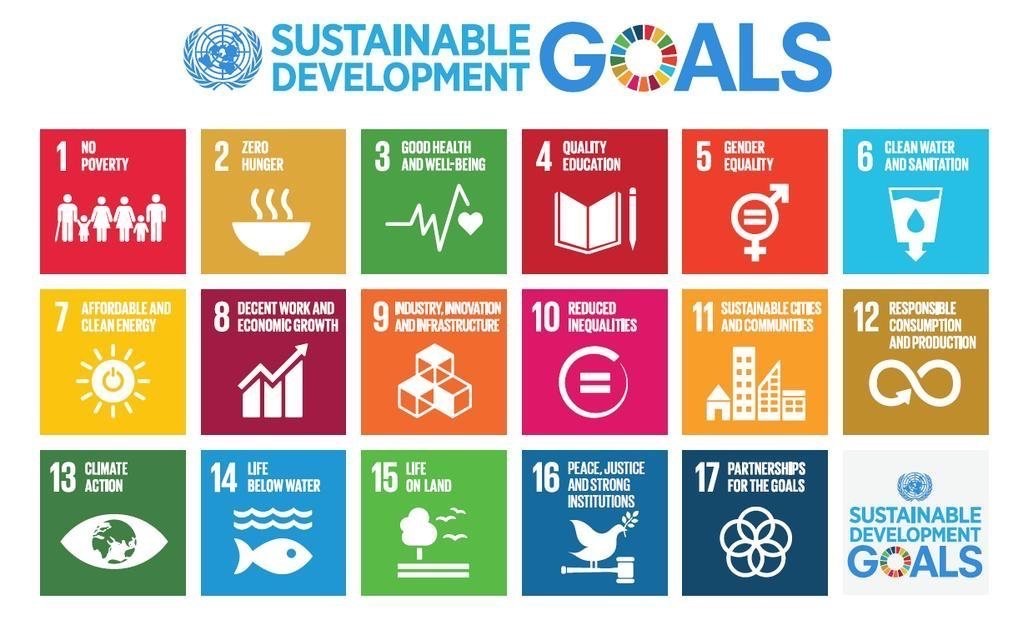
With the SDGs, Humanity is travelling together towards a common future: our common survival or our common doom, common prosperity or common decline. If our civilization is to survive, all of mankind must unite. However, the goals are not legally binding, nobody is penalized if they are not enforced, all we have is a long list of wishes along with the hope that governments, growth and charitable activities will move things far enough in the right direction. We need a more dynamic institutional structure with a firm legal basis whose purpose is to pressurize all United Nations Member States towards full implementation and resolution by 2030 (in 10 years!)
We need a commitment to complete disarmament and sustainable peace.
The build-up of huge arsenals of nuclear weapons has created the potential to extinguish world civilisation. We have enough explosive power to destroy twice the surface of the earth! “Nuclear weapons are still the greatest threat to world peace” The Elders were writing in December 2019. Nuclear war is seven minutes away, and might be over in the afternoon.
The UN General Assembly has repeatedly pointed out that the only defense against a nuclear catastrophe is the total elimination of nuclear weapons and the certainty that they will never be produced again.
Sustainable peace is possible if we transform the international order into a system of world law and the demilitarisation of international politics. In 1961, the USA under President Kennedy and the Soviet Union under Premier Khrushchev reached agreement on a set of principles known as the McCloy-Zorin Accords; they were never implemented.
Albert Einstein in 1947 declared that an enduring world peace would have to be built on four main pillars:
- Worldwide arms control,
- Democratic global institutions that can make binding laws,
- International courts for the peaceful resolution of conflicts,
- Supranational powers of enforcement.
Every year, the world spends 1.7 Trillion US Dollar on military expenditure, imagine how many Sustainable Development Goals we can achieve with that money!
We need a democratic transformation.
The worldwide forward march of modernisation is being accompanied by a shift in values and in culture. Continuing economic prosperity and higher levels of education encourage the turn towards post-material values, which foreground individual self-realization and the search for quality of life, freedom and happiness over issues of economic survival and betterment. These rising self-expression values play a central role in the trend towards democracy. We should not assume any theological path towards enlightenment, generally the movement is towards greater distrust of authority and more desire for accountability, freedom and political choice. We need to strengthen democracy, the rule of law and human rights in all countries. Democracy is a universal value, and moreover it belongs to “the universal and indivisible core values and principles of the United Nations” (UN General Assembly – 2007 – International Day of Democracy).
Herbert Spencer – Sociologist – Empires formed of alien peoples habitually fall to pieces when the coercive power which hold them together fails; and even could they be held together, would not form harmoniously-working holes: peaceful federation is the only further consolidation to be looked for.
Angela Merkel – “Dialogue, cooperation and multilateralism remain essential for society’s efforts to solve the pressing problems of our times, such as climate change and geopolitical tension. Sometimes in the 21st century people don’t talk to each other, we always need to talk, including with our antagonists.”
 @PaulVanBeveren