How do we ensure everyone has access to quality mental and physical healthcare?
Global healthcare spending has increased dramatically over the past decade. Issues previously left to the privacy of a doctor’s consultation room have now been destigmatized. Loneliness, workplace stress, grief, depression, anxiety – these are just some of the mental health issues that stakeholders are waking up to. But physical ailments are also part of the problem. Medical science has made huge leaps, but technology now promises the precision medicine dream once featured in science fiction books and films. How do we identify and solve major healthcare challenges while ensuring fair access for all?
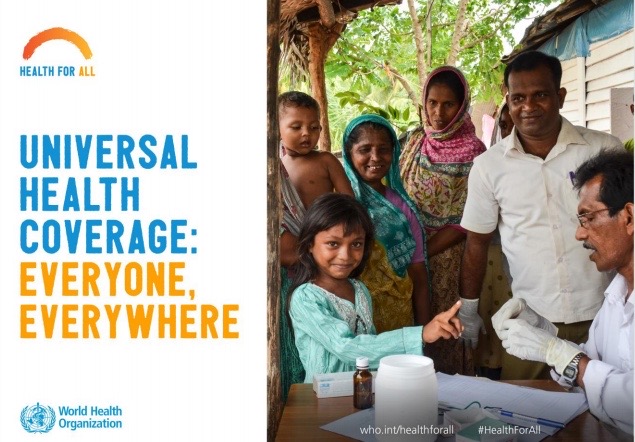
Universal health coverage and universal access to healthcare (WHO)
Universal health coverage means that all people have access to the health services they need, when and where they need them, without financial hardship. It includes the full range of essential health services, from health promotion to prevention, treatment, rehabilitation, and palliative care.
Currently, at least half of the people in the world do not receive the health services they need. About 100 million people are pushed into extreme poverty each year because of out-of-pocket spending on health. This must change.
To make health for all a reality, we need: individuals and communities who have access to high quality health services so that they take care of their own health and the health of their families; skilled health workers providing quality, people-centred care; and policy-makers committed to investing in universal health coverage.
Universal health coverage should be based on strong, people-centred primary health care. Good health systems are rooted in the communities they serve. They focus not only on preventing and treating disease and illness, but also on helping to improve well-being and quality of life.
We need a blueprint for making medicines more affordable for everyone!
The magnitude and severity of Covid-19, next to other diseases, has brought the affordability of medicines to the forefront of global public health. For more than a decade, a worldwide campaign has been agitating for more affordable access to medicines for the world’s poor. This is because hundreds of millions of people around the world don’t have access to the medicines they require to combat and alleviate suffering.
One of the direct causes of the lack of affordability of pharmaceuticals is the patents system.
Patents are a monopoly granted by the government ostensibly to promote greater levels of research and development (R&D) than would exist without some form of intervention.
But the problem is that monopolistic pricing makes medicines less affordable to individuals.
It’s wrong to assume that patents are the sole cause for lack of medicines’ affordability.
The lack of a well-functioning public health-care systems and medicine subsidy schemes; sales taxes; poverty; government corruption; and the high cost of on-going medical treatment are also reasons why many individuals and entire populations lack timely and affordable access to pharmaceuticals.
A Global basic income and a Life free from economic compulsion
There is no more immediate way of combating poverty than by direct grants. A guaranteed basic income for everyone, accompanied by additional social integration and protective measures, show that these are effective ways of combating poverty and social exclusion and providing a decent life for all. Classic development policy, which has deepened corruption and enriched the powerful, the despots, dictators. Clans and warlords all around the world, can be re-routed towards an unconditional basic income.
Man has a right to live regardless!
Erich Fromm – Social Psychologist – This right to live, to have food, shelter, medical care, education, safety, etc., is an intrinsic human right that cannot be restricted by any condition, not even the one that he must be socially “useful”. The shift from a psychology of scarcity to that of abundance is one of the most important steps in human development.
 @PaulVanBeveren