A Story for Leaders
Foreword – Tarot, The Alchemy of Self!
Did you ever use Tarot Cards to gain personal and professional insights? I do!
Powerful change can happen for me when I get out of my head where fears and limiting beliefs live alongside my intellect. Tarot cards allow me to connect with the intelligence that is held in my emotions, intuition and body. It allows me to explore paths in my mind and in my heart which I would not have imagined before. It allows me to find innovative and truthful answers to the challenging questions I have.
A Tarot consists of 78 picture cards. Think of it as a “map of human experience”, covering the Big Themes (Love, Power, Purpose, Relationships, Change, Creativity, Spirituality …) through to everyday events. Because the experiences represented by the cards are universal, they help us connect with our subconscious, and reveal information to us that we have been ignoring or unable to see.
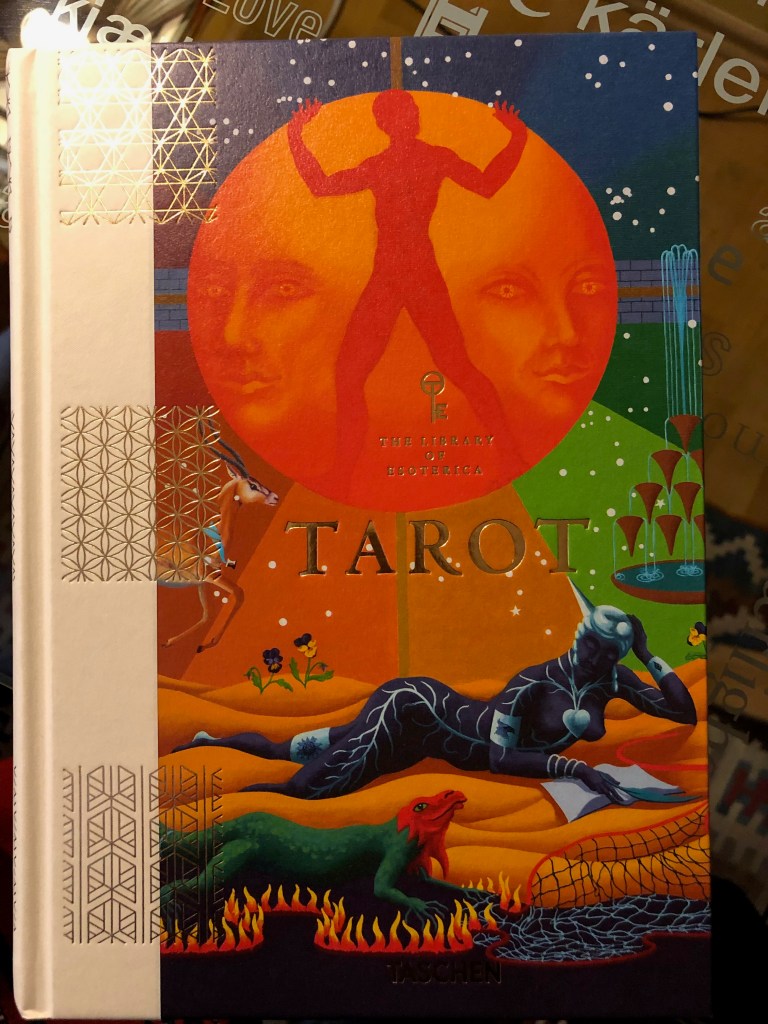
I believe that my human intuition is incredibly powerful and picks information that can’t be understood by the brain alone. Tarot is a tool that provides me with a better understanding of my own minds. The system of archetypes, such as the Fool, the Magician, and the High Priestess, is there to help me find my own reflection within the cards.
We have all these archetypes within us, once we expand our limited sense of self. In this way, Tarot is transformational, allowing us to see the alchemy of ourselves. Tarot allows us to get past all the barriers we put up that prevent us from seeing the path of least resistance. It is a practice that lets us listen to our inner voice, the intuitive self.
The Challenge – Freedom
Freedom is a problem for each of us in the measure that we are concerned with our human condition. As such, it is not suprising to discern that so many of us are grappling with the problem. Life gets a different perspective when you are able to live in freedom, when your tributary relationships vanish and when you float through Life on your own power, your own thoughts and your own beliefs, all while being generous and caring for the thoughts and beliefs of others so we can all live a free life of dignity and respect.
Rev. Dr. Martin Luther King, Jr. famously said “no one is free until we are all free.”
Also the Jewish poet Emma Lazarus (the author of “The New Colossus”, which came to be associated with the Statue of Liberty) wrote: “Untill we are all free, we are none of us free.”
The Question on the table – What is my Journey to Freedom if it is so closely connected to the freedom of all?
So, how would a journey to a Life and a World in freedom look like?
I ask the question and take a card, I receive The Hanged Man!
I am surprised to receive an “immobilized man” as an answer to my question. Why this card? What can I achieve through what feels like a “punishment”?
And, before even reading the symbology and attributes of the card, I take immediately a second card, and I receive The Emperor!
An even bigger surprise, because this card feels like going back to where I come from.
The Hanged Man – the space between

Symbology – A man hangs upside down, his left foot tied to a tree branch serving as the crossbeam of a gallows, constructed of a living tree. His hands are hidden behind his back. His right knee is free and bent, his body forming the shapes of both a triangle and a cross. The colors in his clothes represent calmness (blue), the passions of the body (red) and intellect (yellow). The Hanged One’s expression, surprisingly, is most often shown as serene and meditative. He is not suffering and in pain. His peaceful composure is a clear sign that his predicament is of his own volition.
Attributes – The Hanged Man has chosen his current state of his own free will. He has not been forced; he has deliberately suspended himself in order to discover a new perspective and new way of seeing both the world and himself. The Hanged One can also indicate total surrender or self-sacrifice for the greater good. He asks us for readjustments and re-centering. He advocates for stillness, for a shift in one’s vision, in order to gain new understanding. He simultaniously signifies change, transition, and also deep uncertainty. He asks for meditative consideration, thought before action. He is suspense, the pause, the brief respite before and after a seismic shift. He is the moment between the transitory void and a decision, the gap between choice and manifestation.
The Emperor – the architecture of power

Symbology – The Emperor is depicted as stoic ruler, his stone throne ornamented, symbolizing his astrological association with Aries and the planet Mars. He wields both a scepter of power and an orb, a representation of the domains over which he has total reign. Usually shown bearded, reflective of his wisdom, maturity, and virility, the Emperor sits below jagged mountains, which signify both the strenght of his foundation and the heights he will climb through steer determination. A small river sometimes appears to flow in the background, indicating he is not without emotion. Yet the Emperor rules primarily with strong will and intellect. His gold crown and regal robe signify complete authority. Many older decks also include a shield resting alongside his throne, emblazoned with the Eagle, symbol of the Roman Empire. Others depict the Emperor in full armor, as if ready for battle or just returning from it, victorious.
Attributes – The Emperor represents total power, the divine masculine, the cosmic father. He is authority and order, regulation and rationale. He reigns over systems of knowledge, discipline, strategy and law. His rule is resolute, yet paternal. The emperor relies upon structure and control to create security and stability. He protects and commands. He has clarity of vision and equilibrium of mind. He demands loyalty and order, and leads with calm and principled strength. He is sytematic and organized in his approach, seeing all tasks through to completion. His wisdom calls for correct use of power and so he governs always, with paternal compassion.
The Reflection – Power and Sacrifice
Picking the Hanged Man in association with my freedom question makes me think about a passage in The Underground Railroad from Colson Whitehead when Cora, a runaway, needs to hide in the cramped nook of Martin Wells’ little house: “What a world it is, Cora thought, that makes a living prison into your only haven. Was she out of bondage or in its web: how to describe the status of a runaway? Freedom was a thing that shifted as you looked at it, the way a forest is dense with trees up close but from outside, from the empty meadow, you see its true limits. Being free had nothing to do with chains or how much space you had. On the plantation, she was not free, but she moved unrestricted on its acres, tasting the air and tracing the summer stars. The place was big in its smallness. Here, she was free of her master but slunk around a warren so tiny she couldn’t stand.”
I am at a turning point in my life, stop and assess. I am hanging in the air until I find a new view of the things around me. I am waiting, in order to allow new possibilities to arise. I am willing to let go and to surrender my Ego, taking the opportunity to reflect on the paradox in my Life. There is no pressing need. I adapt to the changed circumstances until I find new insights. The Hanged Man calls me to release my old mental models and behavioural patterns and to transform.
But how does that fit with The Emperor, a card that stands for mastery, power, leadership, responsibility and action? A man who is the abstraction of establishment, its stability and security. The Emperor stands for the social order, the structure of civilization, a symbol for its law and order. Almost the opposite of The Hanged Man!
And this is where my thought process becomes interesting and leads to insight!
When the Emperor pops up, it can sometimes be signal of greatness. The Emperor signifies an ability to affect change in the world. He motivates people and he makes stuff happen. He doesn’t mess around or get caught up in his feelings. He might destroy the world, but he will do what he sets his mind to do. Looking around at our world, one can see that the Emperors (The Presidents, The CEOs, The Generals, The Kings) have been able to accomplish a lot. They’ve conquered continents, created new wealthy civilizations and launched lightening speed scientific discovery. But, as we all know, all that positive action hasn’t come without a heavy price. There is the force of “bad law” where stability or progress is rated higher than morals or ethics, where Emperors put restrictions and borders to spontanity of spirit and nature. The Emperor might stand for a time of progress, stability and structure, lineair thinking and discipline. Yet we can’t live without it, too many of those attributes will only lead to despotism.
The oppositional force to the “masculine” and ordered Emperor is his own shadow self, represented by the Hanged Man. Both the Emperor and the Hanged Man define the past Aeon, where, not only do we see the rise of tyranny, hierarchical rulers, and slave culture, but also the glorification of death and self-sacrifice represented by Christ on the cross. The Hanged Man is “the Card of the Dying God”. The Hanged Man is a complete inversion of the Emperor. They really are mirrors to one another.
The Hanged Man plays joker to The Emperor!

So, while the Emperor is one who goes out into the world slaying and conquering, his twin brother, the Hanged Man, is the ultimate symbol of introversion, stillness and self-sacrifice. The Hanged Man often appears in readings to remind us that we are born into circumstances that are beyond our control. We can’t always use power and force to determine what happens to us. Sometimes the only thing we have control over is our own character, our own integrity.
The Hanged Man is the Emperor’s shadow because while the latter gets power through exacting his will on the world, the former gets power through cultivating his own inner strenght. Yet we have to strike a balance. The Hanged Man can also indicate an unwillingness to take action, an avoidance of responsibility. Thus, we should cultivate ourselves so that we have the integrity to do what is good, and not use other people’s actions as an excuse to behave hideously. Then, as our own masters, wise and loving, we can use our will to enact change in the world for the good of everyone.
What does this mean for me?
I am not a rational being. Despite my knowledge, my experience and my material well-being, I have not improved my personal condition. I am standing at a wall while my old world is crumbling around me. I realize I contributed to a system that created an incredible amount of wealth but at the same time destroyed so much. Despite our prosperity, the question of meaning continues to surface. We live in an idle hedonism, a culture of pleasure that we elevate to meaning. It is blind and dumb Love that is the meaning of Mankind.
I am a refugee. I hope for a fairer world. I hope for salvation.
The Hanged Man cristilizes the Christ Values I have anchored inside me and which I can use as a source for bringing the smallest possible change to the world. Miep Gies (One of the Dutch Citizens who hid Anne Frank from the Nazis during World War II) said it very beautifully: “In our own small way, in our own small world, we can all turn on a small light in a dark room”. The Emperor will find a way to bring that Light, to bring that Change. Every day we need to show the power of Love to the world.
What does this mean for Leaders?
Successful leaders in the future will create a sense of purpose and meaning. They will facilitate true happiness for their people and citizens. But to do that they need to build more mindfulness, selflessness and compassion into themselves and their organizations and communities.
“There are so many great examples of fantastic leaders who are very strategic, very visionary, have all the technical details in place (Emperors), but don’t have the ability to understand themselves (Hanged Man) so that they can understand others and can then understand the organization and culture” Rasmus Hougaard tells to ThePeopleSpace.
Mindfulness allows leaders to be present and attentive to the needs of the world and to what motivates the people they serve. We’ve lost focus on the present!
Selflessness helps leaders to get out of the way and provide the space and support their communities need to thrive. Ego equals problems and is the enemy of great leadership.
Compassion connect leaders at a truly human level and helps their people to trust they have their best interest in mind.
When you put all three qualities together, they enable a stronger sense of meaning, happiness, connectedness and contribution. And once leaders have enabled that in themselves, as a leader, they can bring it to their citizens and their communities.
Conclusion
We locked ourselves in a system that is doomed to fail because it is purely driven by man’s megalomania. Our drive for conquests will be our downfall. The talent we need today recognises our impermanence and strives for reconciliation. It is no longer about conquests but about sacrifice. We will find freedom in surrendering to our imperfect purpose and that freedom will allow us to do the right thing for the world, for ourselves and for others. And we will finally find Love, Peace, Dignity and Happiness; symbols of true Freedom!
Bibliography
- www.victoriasmithmurphy.com
- www.oracleoflosangeles.com
- Tarot, The Library of Esoterica, Jessica Hundley, Taschen GmbH, Koln, 2020
- The Undergroud Railroad, Colson Whitehead, Fleet, London, 2017
- www.thepeoplespace.com
- www.potentialproject.com
 @PaulVanBeveren