How Erich Neumann helps me to understand Human Nature and Human Behaviour.
#NewEthics as a path towards a #FairerWorld.
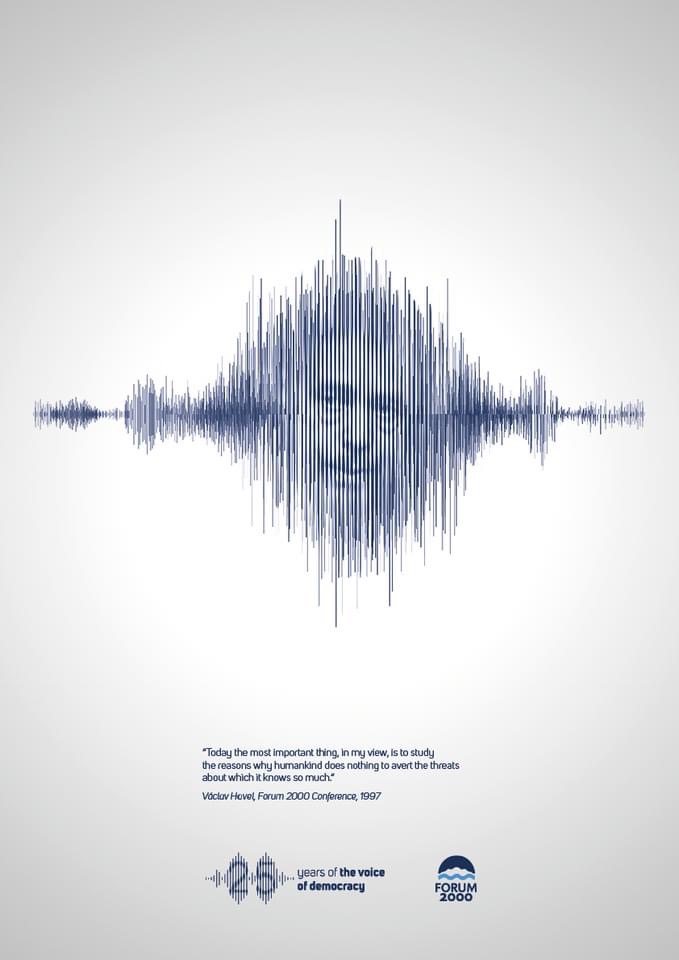
I am following the 2021 ‘Forum2000’ conference that asks the question “What Now? How do we Build Back Democratically?” and one of the posters that promotes the conference holds a 1997 question from former Czech President Vaclav Havel: “Today the most important thing, in my view, is to study the reasons why human kind does nothing to avert the threats about which it knows so much.” Understanding and answering Vaclav Havel’s 25-year-old problem statement might guide us in what to do next, after we defeat the Corona Virus and start working again on a Fairer World.
A Little History of Mankind.
Since the dawn of history Homo Sapiens used his great brain and the development of his fabulous social skills to exterminate (at least 5) other human species, to expand his power and dominance over the planet and its inhabitants and to satisfy his destructive desire for more wealth. The increase in size of our brain makes us not only more intelligent than most other living species, it makes us also more fearful and more anxious. Death developed into a problem and we turned cruel and dangerous. The moment we settled about forty-five thousand years ago, our slash-and-burn agricultural system transformed us into ecological serial killers. More than 99% of the four billion species that have evolved on Earth are now gone. At least 900 species have gone extinct in the last five centuries.
The development of agriculture did not culminate in a better diet or improved food security; it resulted in an explosion of the world population and the ability to keep more people alive in worse conditions. Our search for a better life leads to a lot of hardship, still today. According to the Happy Planet Index (Data 2016), only 8% of the world population are considered to lead a Happy Life.
Slowly (forty thousand years after settling) human cultures, developed as artificial structures of beliefs, norms and values. An aristocratic minority, fed by the productivity of farmers and craftsmen, developed political, social and religious systems. Religion, Economy, Politics, Human Rights and all other laws became the common imagination of people. Language was (and still is) the most important connection between human beings, and language allowed us to tell stories and to spread those common beliefs.
The establishment of City-States and Empires and the dramatic progress of collective power went hand in hand with the suppression of individual freedom and the increase of individual suffering. The Family and Local Communities are being replaced by the State and the Market. New geo-political, economic and religious world orders arise.
New scientific discoveries and technological inventions and the industrial revolution gave mankind a divine status. The genius human is now able to destroy all life on this planet in no time.
We Live in a Material World.
We develop systems, not because they are true, but because we believe they contribute to a better world. These systems are stored in our material world. They feed our desires and a majority of citizens of the world believe in them. We love to dream and the most important economic raw material is the belief and the trust in a better future. But, are we working for a better future? Progress is measured on the basis of productivity, economical growth and material wealth, and not on the basis of a happy life. Happiness becomes the product of material factors like physical health, diet and abundance. Social, ethical and spiritual factors are neglected, the material world has little to no religious, spiritual or metaphysical content. The world becomes one big shopping center and everybody wants money and wealth because everybody else wants money and wealth. Our Political and Economic Systems lack ethical values and guidelines: they cannot ensure that profits are earned and distributed fairly; slavery is a consequence of our desire for wealth and economic growth; capitalism, communism, fascism and other systems have committed the worst genocides; animals are no longer considered living beings, but are reduced to producing machines. How can these systems possibly contribute to a Fairer World?
Conflicts of the Conscience arise.
Our existing #Ethics are weak. And how can their validity be proven? What is Good? Life means a constant reconciliation of opposites; but what are the moral laws, the blueprints against which we can answer those questions? Consciousness often clings to its one-sidedness, to its own arbitrary standpoint. It rejects the possible consequences when confronted with the forces of the unconscious, with desire, greed, cruelty, etc. This leads to moral problems. The only way to heal is for consciousness to take the unconscious into account and to create a responsible relationship between the conscious and the unconscious. The ego-consciousness, who often thinks himself the exclusive world creator, is removed from its monarchical central position, in its place comes the `totality`, the `wholeness`, the Self.
For Guidance
We have a unique individuality. We are living psychic beings, who appear to be relatively autonomous, made up of an ego-consciousness and an unconscious. The consciousness contains our conscious awareness of existing and a continuing sense of personal identity. It is the organizer of our thoughts and intuitions, feelings, and sensations, and has access to memories which are not repressed. The unconscious mind is defined as a reservoir of feelings, thoughts, urges, and memories that are outside of conscious awareness. The unconscious continues to influence behavior even though people are unaware of these underlying influences.
Preface
A community of free individuals is the development goal. However, community and freedom are not proclaimed by atomic bombs; freedom and individuality are not instituted by state mammoths. The small carries the wonder within it, because in the creative individual humanity follows its path through history.
Introduction
The problem of evil is one of the core problems of modern man. How can we come to terms with this evil? Science and Technology undeniably demonstrate that consciousness can handle and control physical nature to a great extent. But this is also a time when people’s inability to come to terms with the psychic nature, with the soul, manifests itself more horribly than ever before. Especially with the Holocaust we have seen that the #OldEthics have been unable to restrain the destructive forces in man. Humanity is to blame, all of us, peoples, countries, religions, classes. It is Evil that, with all its forces, is trying to destroy the actual unity of humanity. It is not good that determines the behavior of man or the people, but the urge to self-preservation activated by danger. Modern man cannot be set in motion for the fight against evil, at the most for the fight against destruction by evil.
A growing number of people is skeptical and unsure of the values of the #OldEthics. The development of the collective lags behind the development of these individuals. The individual creative forces of the unconscious are the impetus for future values and symbols of society. The future of society lives in the present of those individuals entangled in their problems; creative people are sensitive to contents that are not yet perceived by the many.
#OldEthics
The #OldEthics are influenced by Christian and Greek values and are characterized by the inflation of the ego and the ideal of perfection. The Beautiful and The Good are The Human Ideal and are considered as absolute values. Due to that inflation of the good, every nation, every culture, knows itself to be one with the highest values of humanity. An absolute denial and suppression of the negative. It is a conscious act!
“The Saint” has the arrogant certainty of having the good in oneself, and with discipline and through asceticism abstains himself from the satisfaction of physical and sexual needs. Or, we repress the forces of the unconscious and the ego knows nothing of the repressed and its existence, while the repressed undercuts and destroys the world of consciousness. The relationship with the consciousness-system is lost; resulting in a depression.
Man’s Moral Compass is his Conscience, the representative of the collective standard. An essential part of man’s moral institution is determined by time, the environment and the community. Everything that is not in line with the balance of society or the ethical guideline is declared taboo and gives us social anxiety or a feeling of guilt.
The consequence is a dualistic split world and the formation of two psychic systems in the personality. There is a split between the world of consciousness with its ethical values and the world of the unconscious with its false values, which are suppressed and repressed.
- The Persona is the conscience, the fake personality behind which the individual hides, it is based on social convention and on the demand of the collective, it is narrowing the consciousness through a conscious denial of the negative, it is blind to essential aspects of reality. It is an illusion.
- The Shadow is the unconscious, the inner voice, it is one’s own imperfection and earthiness, it is the earthly-material, the physical, the negative which is contrary to the absolute values. It is the uniqueness and transience of human nature, its own relativity and limitation. It is the accumulation of suppressed and repressed content, our trauma’s.
The Shadow is fought as “the foreign in the outside world” instead of as “the own in man”. One’s own, unconscious anti-attitude that undermines the attitude and certainty of the consciousness is shifted outwardly and silenced within one’s own self. We project our shadow on the outside world and we blame others (scapegoats), strangers (the ethically inferior) and minorities (religion, nationality, race, gender, social) for the evil in the world. “We” (The superior people, the leaders and genius figures) are different and have nothing in common with evil.
All these delusional systems have the sole purpose of repressing one’s own aggression and one’s own shadow. The lust for war is derived from the satisfaction of the unconscious shadow side, this is how we unconsciously create evil in the world.
Stages in Ethical Development
- The Powers of the Unconscious. The Ego is prey to the forces of the unconscious. These forces and urges – lust, addiction, will to power, survival instinct, greed, cruelty, hunger, fear and superstition – have taken possession of the ego; it is at the mercy of it and it is governed by it.
- The Original Oneness. The individual is dependent on the group, the world and the collective unconscious. Every human being is seen as the incarnation of the whole group. There is only group responsibility and group ethics. Every person submits to the collective law, there is no individual and conscious ethical responsibility yet.
- The Rise of the ‘Great Individual’. Ethical values arise as a result of revelations in the creative center of an individual (a leader), he hears the voice (of God). It is the first step to awareness and his charisma is spiritually fertilizing the community. Backed by an elite, the new leader creates a human ideal, which the elite, as the executive power of the ‘creative personality’, uses to nurture the collective with rigorous tenacity. The leader represents the father archetype: a symbol in which the infantile self of primitive man is influenced by the collective super-ego.
- The Development of Consciousness (and the unconsciousness). In the development of consciousness, it comes to the break-through of the Original Oneness, in which the unconscious dominates. A boundary is drawn beyond which the unconscious nature of man with its elementary and incalculable emotionality is pushed back. The formation of conscience as an inner psychic institution is a sign of the individualization of the group-human. For a small group, the commandments of the Leader correspond to their own nature and level. But the larger group is `imposed` on the value system as a law, but is not yet ripe for it. This leads to a splitting process, a spit of the personality, the formation of a make-believe personality and the suppression and oppression of the unconscious; repression into the shadow of all parts of the personality that do not conform to the collective values. The conscience becomes a representative of the collective super-ego, the psychic body that represents the collective values in the individual, social anxiety.
- The Individual Ethical Responsibility. The development and the expansion of the ego and the consciousness of the individual demands the liberation of the individual and his ego-consciousness from the primitive collective. Two directions are possible:
- The decline of the #OldEthics. The gap between human nature and the demands of the elite (society) are too big. This leads to a regression of consciousness, culture and ethics, to a disintegration of the personality. The lability and incalculability of the individual increases to the extent to which his consciousness decreases or in which – conversely – the autonomous unconscious content becomes active. Nihilistic and materialistic movements emerge due to a lack of inner coherence in modern man.
- The development of #PersonalEthics. The process and ethics of Individuation. The revelation of “the Voice” in the individual is opposed to the conscience as a representative of the old, collective ethics; the ego-consciousness takes itself as a guideline.
- The Equality of Human Nature. The unconscious structure in every human is the same. The collective unconscious is the precipitate of the identical and primordial instinctive reactions of the human species. This equality of humanity drives our responsibility towards ourselves and towards the community as a whole. A #NewEthics emerges that no longer considers the ethical attitude and conclusions of the individual in isolation, it reflects the progressive ethical evolution of the individual that takes into account the influence of the ethical attitude on the collective. #NewEthics demands the recognition of the unconscious contents and their suppression; preventing the splitting of the soul and accepting responsibility for the unconscious processes.
#NewEthics
The Holocaust was the start of a series of cruel events that has thrown us in a moral crisis, a crisis of consciousness creating existential uncertainty. The Holocaust was a deep violation of the integrity of the I in every human being. It was a cruel discovery of the primitive in human nature and a confrontation with our total personality. Our Values and Ideals are deeply shaken, and we feel the connection between the collective problem and the fate of the individual, who is deeply penetrated by the obscurity of his own ideological and spiritual insecurity. We are in a state of collective reduction in our self-esteem; aware of our biological, historical, sociological and psychological determinacy; realizing our worldview, sense of norms and way of life is not up to the current problems; still today, after nearly 100 years.
- The assimilation of the ‘shadow’ and the processing of the ‘persona’. The old, idealized self-image is lost and one comes to the dangerous recognition that one’s own existence is open to more than one interpretation. The inflation of the ego is nullified and it finds itself where it is and was narrow, one-sided, biased and unjust. The ego must come down from its throne. The ego must realize and accept its individual, constitutional, fate-determined and historical imperfection. The realization of one’s own imperfection, which is implicit in the acceptance of the shadow, is a difficult task. In the encounter with the shadow, a mighty unconscious inner structure with aggressive and destructive craving, the ego sheds its persona identification with the collective values. The unconscious often determines man’s life to a greater extent than his consciousness, will or intention.
- The reaction to the confrontation with the shadow.
- Collectivistic and Deflationist. The consciousness is deeply shaken by the encounter with the shadow side of the world. The Self identifies itself with the collective non-values; it lowers the value of the individual. Self-esteem deflation patterns occur, resulting in a radicalization of the materialistic tendency. The Mind is a side effect; mind and insight serve only as an instrument of a complex of urges in the group or the individual. Sociological values are ideologies, and culture is an ‘improper’ product of the psychic structure which is essentially unconscious.
- Individualistic and Inflationist. She places the individual and the I on a pedestal in a mystical or illusionistic way, calling out the moral insanity of the collective. The material world is an accompanying phenomenon. A utopian anticipation of a state of redemption. The figure of the leader is the figure of the savior. The primordial spirit, the deity, floats in the boundless and absolute, it denies the negative. The individual is liberated from his moral problems and is collectivized again. The personality is dissolved, the shadow is forgotten, and the shadowed individual is driven into the arms of madness. It is the attempt to ignore the dark world and thus avoid the crisis of consciousness that is inevitable if the problem of evil is taken seriously. Neither is able to eradicate and dissolve the reality of the shadow that burdens modern man. Due to this widening gap between the opposites, man has been lost in the middle. Lability is the result of the catastrophic split with the shadow side.
- The #NewEthics, A Total Comprehensive Ethics. The #NewEthics rejects the rule of a part of the personality; it claims the whole personality as the basis of ethical behavior. The total personality is responsible and not just the I as the center of consciousness. The #NewEthics is based on the awareness of the positive and negative forces in the human structure. The sacrifice of the ideal of absolute perfection of the ancient ethics in no way diminishes human worth. The expansion of the personality is the result of assimilation and awareness of unconscious content that carry the future within them and guide the conscious in new directions. The love of the shadow and its acceptance, psychologically speaking, is only the basis for the ethical attitude that can be realized. The reconciliation with the shadow is always the precondition for a truly tolerant attitude towards other people, other groups and other psychological culture forms and levels. By taking responsibility for the shadow as a whole, the projection of this part of the personality, the scapegoat psychology and the ethically garnished fight and eradication of evil in the other, comes to an end. The acceptance of the shadow means the gradual intergrowth with the depths of one’s own primordial soul. The incorporation of the shadow means in a collective sense, for the surrounding world, that people start to carry the ethical responsibility. The ethical situation of the individual changes and the individual’s attitude has a changing effect on the collective. My shadow is a component and exponent of the shadow of all humanity. It takes into account the ethical situation of the individual and the effect of the individual attitude on the collective: my shadow is a component and exponent of the shadow of all humanity. In an individual sense, for the inner world, it means that the individual becomes co-responsible for the primitive mass-man, who is an integral part of every personality. Illusions poorer, but richer in understanding and insight. It requires a process of continuous self-examination and self-monitoring. The center of gravity of the personality is gradually shifted from the ego and consciousness to the Self and the Psyche as a whole. Ethically unsuspected in the sense of the New Ethics is only the person who has accepted the problem of his shadow.
Aims and Values of the #NewEthics
- Establishing an integration. Opposites rule the entire world of experience. Integration brings a synthesis of the opposites, the union of opposites in a structure that forms a rounded whole. Actually, there is no eradication of evil. The Light cannot be extinguished by a force of darkness and there is no indication that a force of light can ever make the dark disappear. This claim also applies to the individual; the personality therefore has the task of living through the evil that fate ‘distributes’ to it in its own responsibility. The inner world manifests itself not only in religion and art, but also in politics and technology. The fantasy images of a man driven by power ideas plunged the world again and again into a vortex of war and destruction. Conversely, the inner images of the creative man become the cultural property of mankind. The sacrifice to be made here is that of innocence and absolute unambiguity, connecting the shadow and the unconscious with consciousness and life. The acceptance of the dark constantly reminds the individual of the limitations of his structure, of the earthly bondage of existence and his dependence on drives and instincts. He is humanized by it. The assimilation of the shadow means for man the union of the ego with the deeper psychic layers which represent the world of non-equivalent function and primitive humanity.
- The symbolic elder murder. From a large number of wrong developments, it becomes clear how often the wish to be a `good child`, who shuns parental murder, is paid for with the dangerous sacrifice of one’s own independence in life. Becoming independent is not only to accept the values of the collective, but also to realize the essential needs of the individual that conflicts with these collective values – that is, to do evil.
- The Unity Structure. Total ethics demands responsibility for the total personality. The demand of the new ethics is met when the individual has to deal with evil ‘assigned’ to him by his constitution or by fate, on his own authority. The new ethics includes the fundamental understanding that the human structure is very diverse and that individuals living at the same time can belong to the most diverse cultural strata and stages of consciousness. The principal of truth in the new ethics concerns the real relationship between the ego and the unconscious. In the new ethical situation, the ego-consciousness becomes the responsible head of a psychic league of nations; atheists and religious, instinctive and intellectual, destructive and constructive elements are represented side by side. The totality of the personality, its autonomy and integrity, is the basis of value-creating processes. The individual becomes internally autonomous, psychologically healthy and productive. The recognition of one’s own evil is good. By accepting evil, modern man accepts the world and himself, in all their dangerous duality. Apart from the conscious, controlled realization of the negative contents, their change within the personality plays a greater and decisive role. What leads to totality is good and what leads to inner division is evil; integration is good, disintegration is evil. The transformation, the rebirth is always dominated by the unification. The inclusion of the negative in the integration process is not only the criterion of force, but also of the ethical capacity.
- The Centroversion. The union of heavily forces and earthly passions. Modern man does not try to reject the reality of the world by judging, but to accept it and to arrive at a synthesis, a higher unity in himself.
- Individuation. An individual ethics and its collective implications: a stable ethical autonomy as a fulcrum for the collective. The individual takes part of the burden of the collective in his own responsibility; in the processing of his evil, a part of the evil of the collective is always included. The individual who has reached an inner unity becomes co-responsible for what the group does, and thereby also changes the ethical judgment through the unconscious interconnectedness of the individuals. Such a personality has more insight into the heights, but also into the depths and shallows of the human, because he has experienced and lived through them in himself. That personality cannot be disrupted by the panic of the awakening, for it has already passed the horror. She is able to cope with the changes that time brings and, without realizing or striving for it, has a leadership position.The Prophets of the Old Testament experienced the shadow aspect of the people and its dangers, and then acted upon and warned against them. And conversely, through their own collapse, they experienced the new, constructive forces from the unconscious and the changes of salvation themselves, and then carried them out as comfort and promise to the outside world.
- A New, Changed Image of God. Behind the personal moral problems of the individual looms the moral problem of the collective of which the individual is a part, and the awareness of his collective hypocrisy and repression, his dependence of the prevailing mode of thought and action, and its shortcomings. The last step is the moral problem of all mankind, which is also that of the deity. The inner moral problem transcends the boundary of the personal and in broader sense becomes the problem of evil in humanity and evil itself, or, in theological terms, the problem of evil in God. God and Satan are not separate, but interrelated aspects of the divine mystery. The relationship of the divine with the world is lived in listening to the inner voice of the divine in man and not in the fulfillment of established ethical duties. “Their nature cast a dark shadow, but precisely because of this they remained connected to the deity at the core of their existence – Abraham, Jacob, Moses, David.” God also loves his plague. It forces the ego to a new orientation, which has the relativization of good and evil as the starting point for a meaningful life. The creator of light and darkness, of good and evil impulses, of health and disease confronts modern man with the ambiguous unity of his divine mystery.
The principle of perfection is sacrificed to the totality. Total ethics is confronted with an imperfection which includes man as well as the world and the deity, for the deity is also imperfect, because and insofar as it contains the opposites.
The growing awareness of the general human limitations must and will lead in the coming centuries to an even stronger human sense of solidarity and to the recognition that people, despite all differences, have in principle an identical structure.
It seems as if humanity is gripped by the icy cold of the dead, empty world space, which – deprived of its belief in a God, its Soul and its Humanity – surrounds it in all its monstrosity. People will have to move closer together to cope with this force majeure. Humanity is slowly but surely taking back all the psychic projections with which it has filled the emptiness of the world through hierarchies of Gods and spirits, heavens and hells. She is amazed by the creative richness of the primordial soil of her own soul.
But from the midst of the ever-widening circle of men, which is beginning to form through the conglomeration of all human groups, nations and races, continents and cultures, the creative deity, formless and manifold, penetrates into the interior – the same deity who previously filled the heavens and the realms of the human world.
We are ready for a #FairerWorld!
Bibliography
- Ethiek van de Toekomst, Erich Neumann, 1949.
- What Now? Building Back Democratically, 25th Forum 2000 Conference, Forum 2000, 2021.
- Sapiens, A Brief History of Humankind, Yuval Noah Harari, Penguin Random House, London, 2011.
- Happy Planet Index, 2016.
- Our World in Data, Biodiversity, Extinctions, 2020.
 @PaulVanBeveren